【期間限定】特別無料体験キャンペーン実施中
あなたのビジネス目標を形にする、「2ステップ・無料体験セッション」を都内エリアで実施しています。まずはオフィスやカフェで、リラックスしてあなたのニーズをお聞かせください。
- Step 1: ヒアリング (45分)
現状の課題や目標を丁寧に伺い、最適な解決策の方向性を確認します。 - Step 2: 体験コーチング (45分)
ヒアリング内容に基づいた、実践的な個別コーチングをご提供します。
東京23区内のオフィス、または落ち着いたカフェなどのご希望の場所へ伺います。
お問い合わせ
Take charge of your career
Gain confidence with essential skills. Lead teams with effective techniques and help your colleagues get ahead. Choose materials from elite institutions or request custom coaching or writing support.
Try a session
Teamwork skills
Arrange a one-day or ongoing program that builds essential abilities. For example:
- Practice a variety of storytelling structures for business purposes.
- Perfect fundamentals of academic writing with Oxford or Stanford curriculum.
- Expand persuasion skills with key vocabulary, expressions, and rhetorical techniques.
- Raise TOEIC (or similar tests) scores with focused exercises.
Team members can use evaluation rubrics to give each other feedback and develop new feedback techniques. Custom requests are always welcome, or you may wish to facilitate existing programs. Please ask how we can create dynamic learning experiences for your teams.
Contact for more info
In Your POV
IN YOUR POV: Discuss short stories and film with a focus on narrative techniques.
Content: Discuss narrative techniques that include interior monologue, dramatic monologue, letter narration, diary narration, subjective narration, detached autobiography, memoir, anonymous narration, dual character point of view, multiple character point of view, no character point of view, and more.
Time: Various times may be available.
Platform: Signal and other platforms, or in-person.
Contact: Contact today for more information.
Flow: Enjoy expressing your understanding of the text. Try and facilitate conversations with engaging questions and friendly feedback.
Contact for more info
SUBJECTIVE NARRATION
"Distance" by Grace Paley
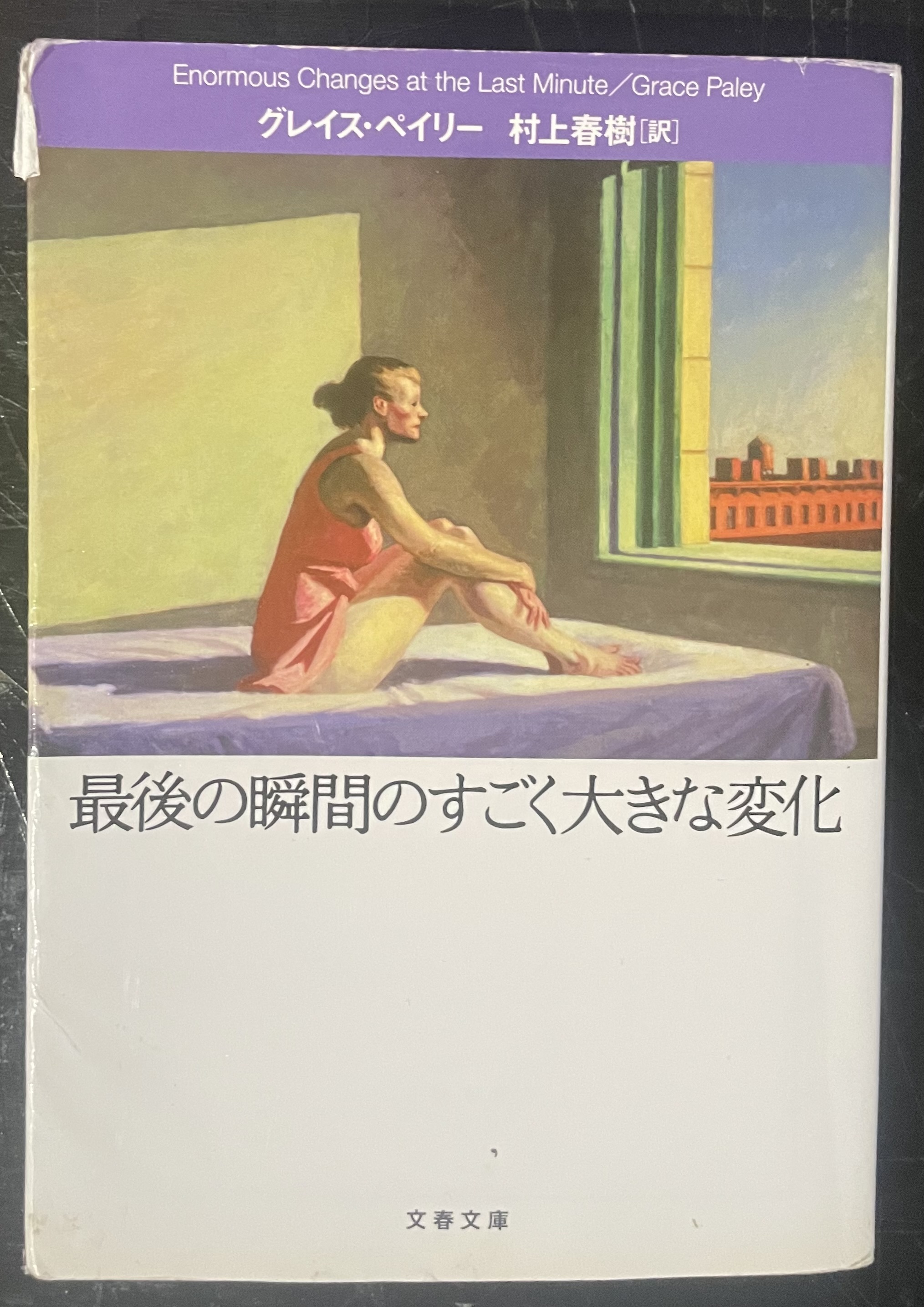
The image comes from my desk. It is Murakami's translation of short stories by Grace Paley, which includes "Distance," or 道のり. It is a noted example of subjective narration.
Subjective narration usually features a character who recounts the past to a general audience. The narrator is limited by their awareness, which may be reliable or unreliable, and exposes people in time periods, class, education, prejudices, abilities, and shortcomings. Subjective narratives also expose limitations on knowledge and raise questions about what lurks in the shadows.
Understanding the limits of subjective narration challenges the boundaries of "objective" narration. When are editorial choices subjective vs. objective? Every storyteller is fallible. Personal choices exist, and narratives often serve identity, corporate donors, or interested parties. When people claim to be objective, their narrative is often called into doubt. Consider how few people trust government PR representatives or corporate journalism -- trust levels are below 30%, as few think they are being given objective reality.
Unlike the pretense of objective narration, subjective narrators, like Paley's, build trust through authentic feelings, admitting weakness, sharing vulnerabilities, and invoking empathy through shared experience. As you read this piece, consider what you trust or don't trust about the narrator. How does this influence your understanding of distance? Do you feel invited to share her thoughts with cynicism or an open embrace?